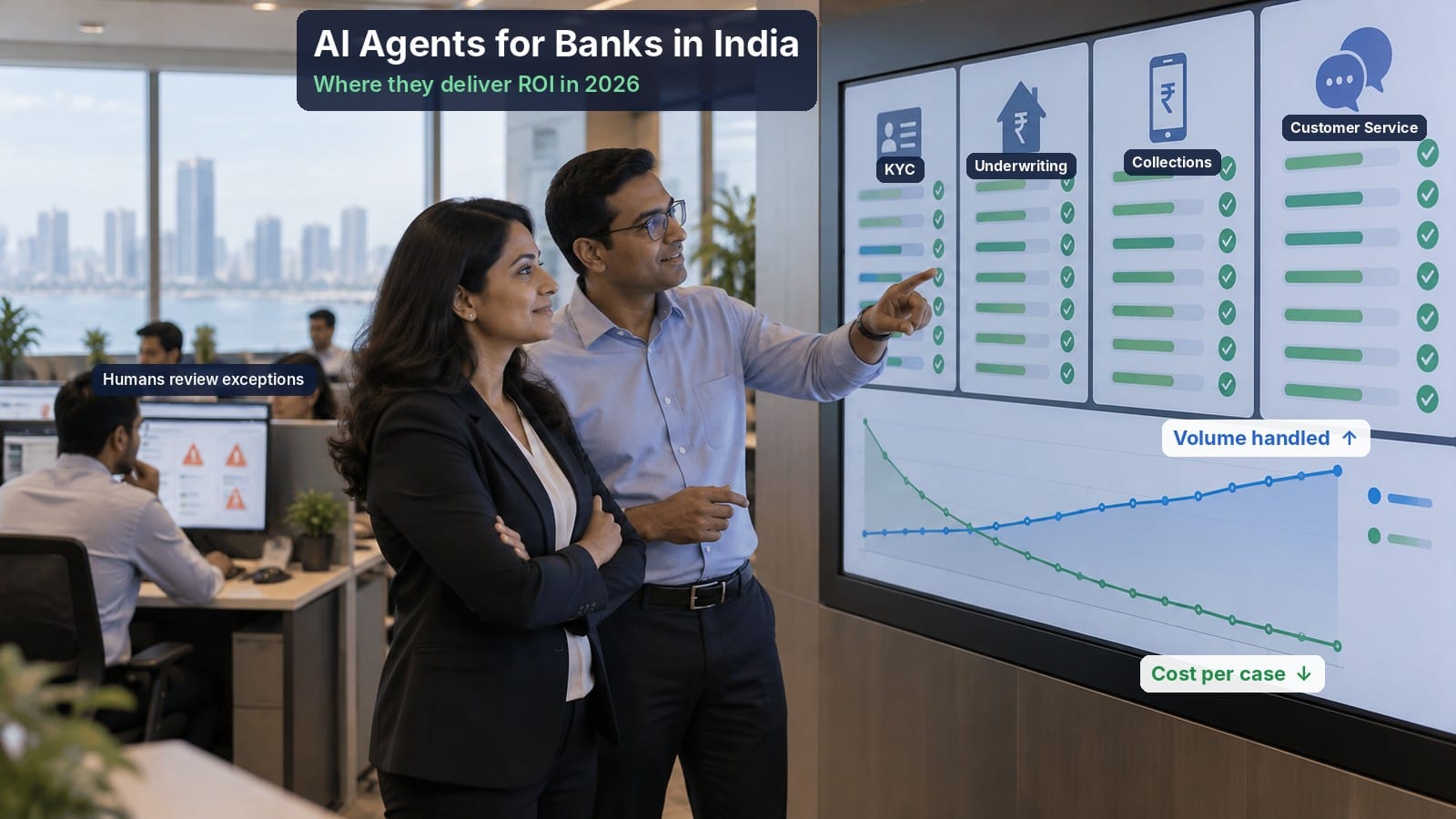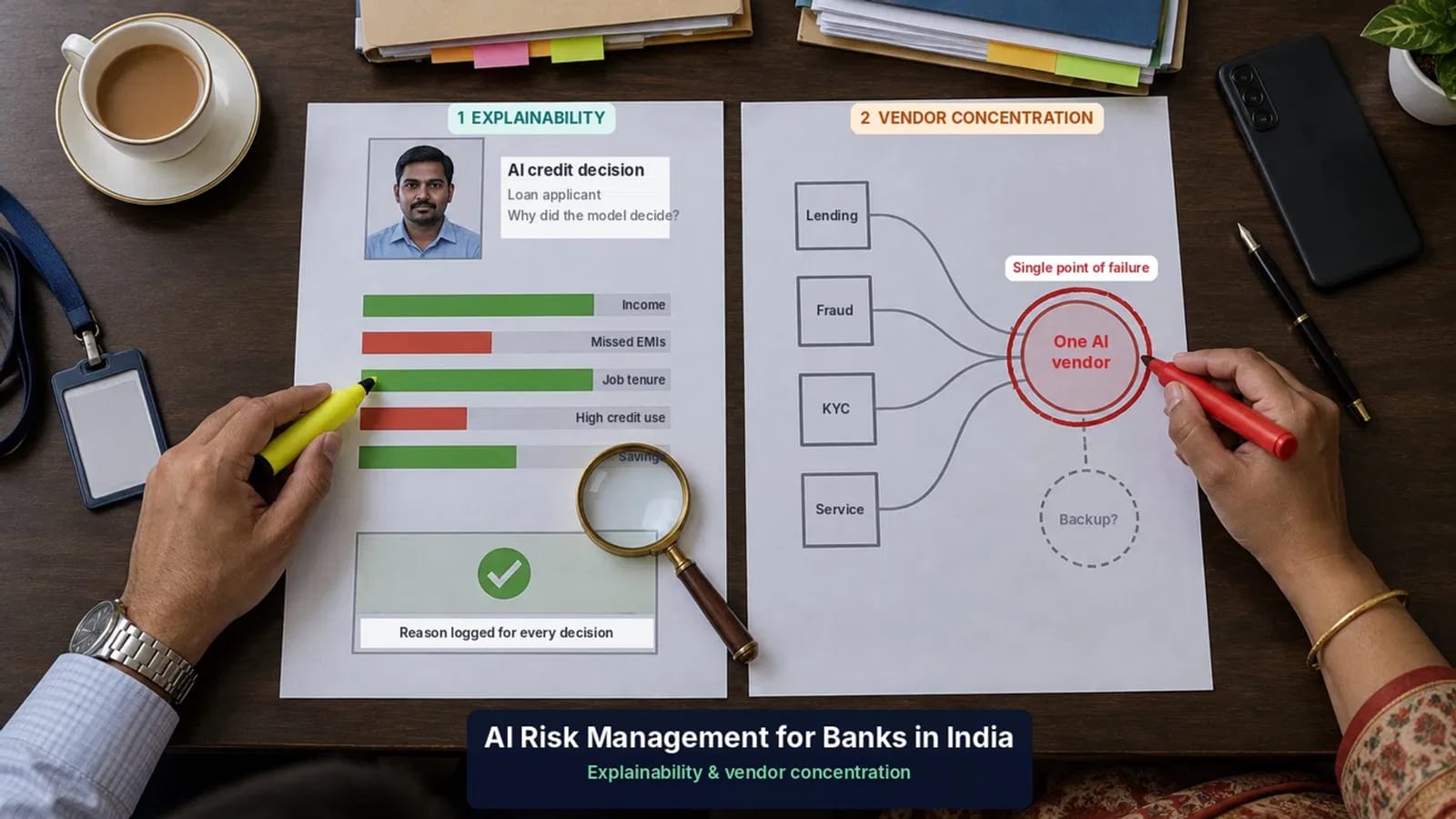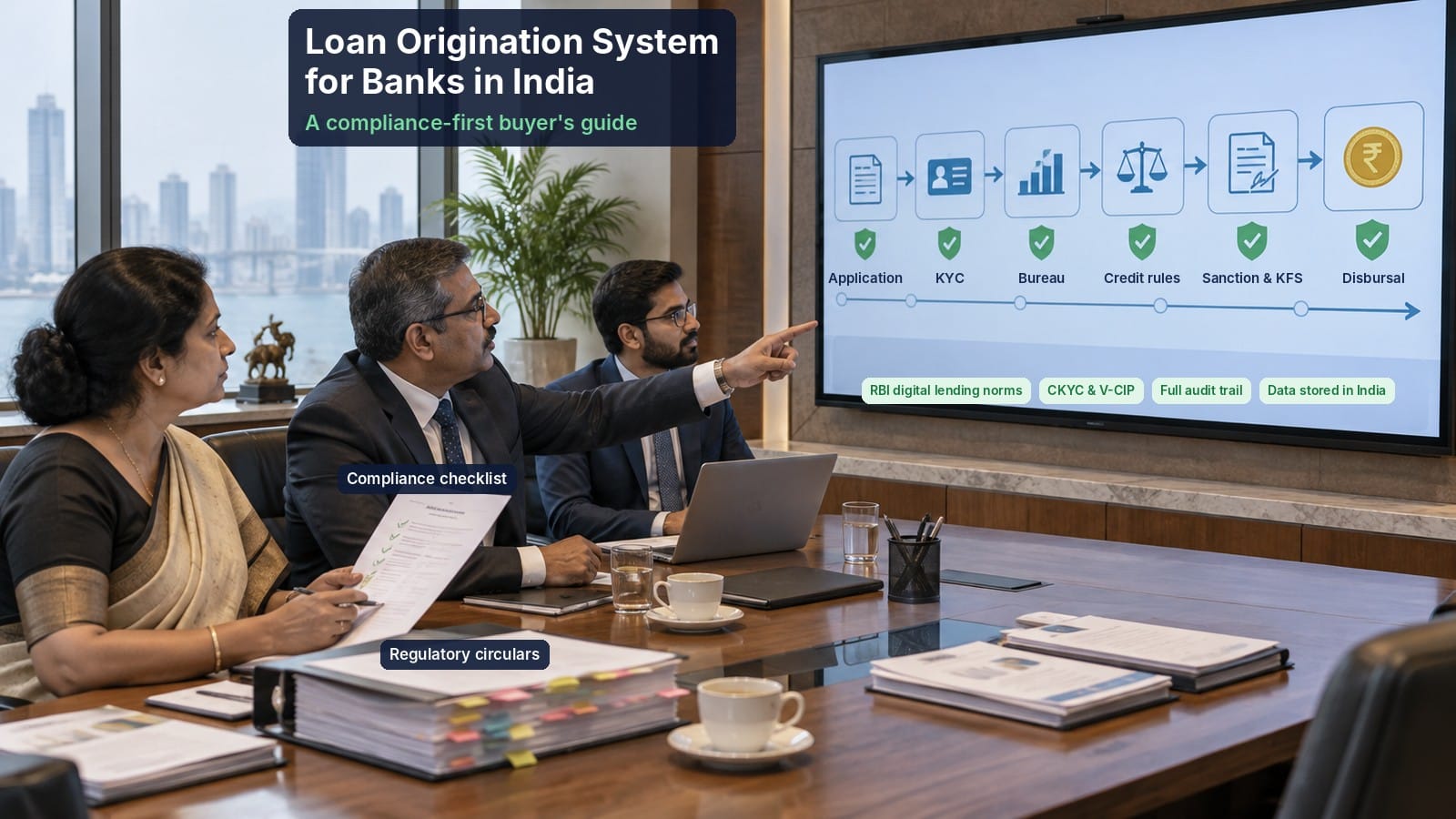
Short answer: AI pilots in Indian lending rarely fail because the model is wrong. They stall because no one can explain the decision, own it or audit it at scale. That is an architecture problem, not a data science problem, and lenders that solve it first will move AI from pilot to portfolio.
Every large bank and NBFC in India now has an AI credit pilot. Most show better accuracy than the scorecard they’re compared against. Yet very few have made it into production for meaningful volume.
Ask why, and the answers sound different but share a root. Risk can’t sign off on a model it can’t trace to policy. Compliance can’t approve a decision it can’t reconstruct. Operations can’t absorb a tool that sits outside the loan journey. The model works. The system around it doesn’t.
We call the fix accountable autonomy: letting AI decide as much as it safely can, with every decision traceable to a rule, routed to a human when it should be, and recorded so anyone can follow it later.
Where do AI credit decisions stall in Indian lending?
They stall at five predictable points. Each is a gap between the model and the institution that has to stand behind its output.
| Failure point | What goes wrong | The cost |
|---|---|---|
| Decision logic | Model scores aren’t tied to written credit policy | Risk committees won’t approve what they can’t map to policy |
| Workflow | AI runs outside the origination journey | Outputs get re-keyed and re-checked, wiping out the time saved |
| Human oversight | Sign-off is all-or-nothing | Either every loan waits for a human, or none does and risk balks |
| Audit | Inputs, rules and versions aren’t recorded per decision | No one can answer “why was this loan approved?” months later |
| Front line | Staff can’t explain outcomes to borrowers | Complaints rise and trust in the tool falls |
The regulatory direction makes these gaps harder to ignore. The RBI (Digital Lending) Directions, 2025, issued on 8 May 2025, keep responsibility with the regulated entity, including for the conduct of its lending service providers. They also align data obligations with the Digital Personal Data Protection Act, 2023, whose Rules were notified in November 2025.
Then, in August 2025, RBI’s FREE-AI committee report set out 7 guiding principles, or Sutras, for AI in finance, among them Accountability and Explainability, backed by 26 recommendations across six pillars. The framework is advisory, but the message is clear: you can delegate the decision to a machine, but not the accountability.
Notice what’s missing from the table: model accuracy. Lenders keep investing in better models while the bottleneck sits in the plumbing around them.
How much should AI decide? The autonomy ladder
Autonomy isn’t a switch. It’s a ladder, and each rung needs specific controls before a lender climbs it. Most institutions try to jump from rung one to rung four, and that’s where pilots die.
| Rung | What AI does | Who decides | Controls needed before climbing |
|---|---|---|---|
| 1. Assist | Summarises documents, flags gaps | Credit officer, on every case | Data consent; output logged |
| 2. Recommend | Proposes approve, decline or refer, with reasons | Credit officer, with AI rationale in view | Reasons mapped to policy rules |
| 3. Decide within bounds | Approves or declines inside set limits | AI inside bounds; humans on exceptions | Explicit thresholds; exception routing; per-decision audit trail |
| 4. Decide and adapt | Adjusts within approved policy over time | AI, with periodic human review | Model monitoring; version control; drift alerts |
Three principles follow:
- Climb by segment, not portfolio. A small-ticket, repeat-borrower segment can sit on rung three while a new MSME product stays on rung two.
- Bounds come from policy, not the model. Ticket size, bureau thresholds and exposure caps are business rules. They should be readable by a risk committee, not buried in model weights.
- Exceptions are a feature. A well-designed rung three sends the right 10–20% of cases to humans. That’s what makes the other 80% defensible.
The 10–20% split is illustrative; each lender should set it by segment and risk appetite.
How Trustt builds accountable autonomy into lending
At Trustt, we don’t treat AI as a layer added on top of lending. We build it into the same platform that runs the loan, so accountability is designed in rather than patched on.
| Failure point | How the Trustt platform addresses it |
|---|---|
| Decision logic | Business Rules Engine (BRE) keeps credit policy explicit, versioned and readable by risk teams, separate from any model |
| Workflow | Loan Origination System (LOS) runs AI steps inside the origination journey, so nothing is re-keyed |
| Human oversight | Rules in the BRE decide which cases go straight through and which go to a credit officer |
| Audit | Each decision is recorded with the inputs and rules that produced it |
| Front line | TrusttAI assistants help staff explain outcomes and next steps to borrowers, in Indian languages |
This isn’t a lab design. Trustt’s Digital Lending platform runs origination, credit rules, servicing, collections and co-lending on one data layer across 14 loan products, with explainable decisions built in. Trustt is used by 100+ financial institutions across Indian banks, NBFCs and fintechs.
The result is that a lender can climb the autonomy ladder one segment at a time, using one platform, with one record of every decision. Risk sees policy. Operations sees one journey. Compliance sees an audit trail. And the borrower gets a faster, explainable answer.
Because origination, decisioning and servicing (through our Loan Management System) sit on the same Digital Lending Platform, the evidence for a decision doesn’t scatter across tools. It lives with the loan, for its whole life.
What should lending CXOs do next?
- Diagnose your stalled pilot. Run it against the five failure points above. The blocker is almost never the model.
- Pick one segment for rung three. Choose a small-ticket or repeat-borrower product with clean data and clear policy.
- Write the bounds as rules. Get risk to sign off on thresholds in plain language before any model touches them.
- Design the exception path. Decide which cases go to humans, who handles them and how fast.
- Make audit a default. Every decision should be reconstructable without asking an engineer.
- Measure what risk cares about. Track straight-through rate, exception rate, turnaround time and early delinquency by segment.
The lenders that win with AI won’t be the ones with the cleverest models. They’ll be the ones whose risk committees trust the system enough to let it run.
Exploring AI in credit decisioning? Talk to Trustt about taking one lending segment from pilot to production on a platform built for accountable autonomy.
Frequently asked questions
Can AI approve loans in India? Yes, within limits. AI can make or support credit decisions, but the regulated entity remains fully accountable for every outcome. Lenders need clear policy bounds, human review of exceptions and a full audit trail.
Who is accountable for an AI credit decision? The bank or NBFC that made the loan. Using AI, a vendor or a lending partner doesn’t transfer responsibility under RBI’s digital lending framework.
Why do AI lending pilots fail to scale? Mostly because of gaps around the model: decisions not tied to policy, AI running outside the loan workflow, no exception routing and no per-decision audit trail.
What is accountable autonomy in lending? An approach where AI decides as much as it safely can, inside policy limits set by people, with exceptions routed to humans and every decision recorded.
How does Trustt support AI in credit decisions? Trustt’s Digital Lending Platform combines a Business Rules Engine, Loan Origination System, Loan Management System and TrusttAI, so AI decisions run inside the loan journey with policy, oversight and audit built in.
About the author
Gautam Bandyopadhyay is CEO & Co-Founder of Trustt, the AI banking platform that Indian banks, NBFCs and fintechs use to run lending, partner distribution, digital identity and AI agents on one configurable core.
Before co-founding Trustt (formerly Novopay), Gautam held roles across product management, consulting, global delivery and innovation at Infosys Finacle. As Head of Innovation, he set up the Finacle Innovation Hub and added two products, Finacle Inclusion Solution and Finacle Digital Commerce, the platform behind Airtel Money. Connect with Gautam on LinkedIn.
Trustt: Technology you can bank on!