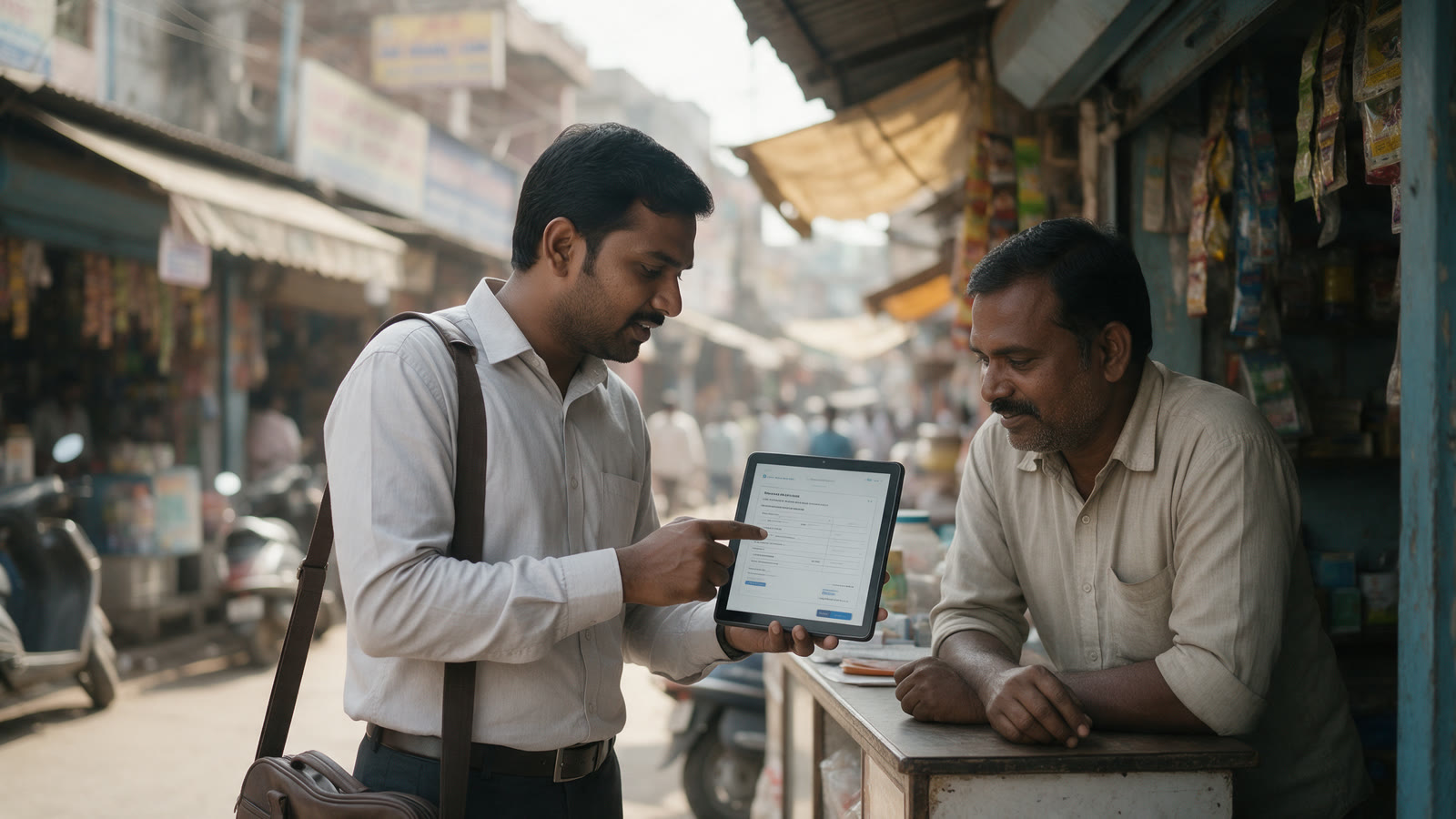
DSA full form in banking is Direct Selling Agent. A DSA is an individual or firm that a bank or NBFC appoints to find customers for its loans and other products, collect their documents and pass the application to the lender. The DSA does not approve the loan: the lender does, and the lender pays the DSA a commission.
Walk into any market in a tier-2 town and ask who helps people get a home loan or a business loan. The answer is rarely the bank branch. It is the local agent who knows the shopkeepers, the salaried families and the paperwork.
That agent is usually a DSA. And for many Indian lenders, DSAs bring in a large share of new loans.
What is a DSA in banking?
A Direct Selling Agent is a third party, not a bank employee, who sells a lender’s products under an agreement with that lender. DSAs can be:
- Individuals: freelance agents, chartered accountants, property dealers, insurance advisors
- Firms: small agencies, loan marketplaces and large DSA companies with their own sub-agents
A single DSA often works with several banks and NBFCs at once, and compares offers for the customer.
What is the work of a DSA in a bank?
- Find the customer. Through local networks, referrals or digital leads.
- Check basic eligibility. Income, existing loans and the documents needed.
- Collect documents. ID, income proof, bank statements, property papers.
- Submit the application. Into the lender’s system or portal.
- Follow up. Until the loan is sanctioned and disbursed.
- Get paid. The lender pays a commission (often called a payout) on disbursed loans. The customer should not pay the DSA.
The DSA sources. The lender decides.
DSA vs DMA vs BC: what is the difference?
These three terms get mixed up often. The difference is what each one is allowed to do.
| DSA (Direct Selling Agent) | DMA (Direct Marketing Agent) | BC (Business Correspondent) | |
|---|---|---|---|
| Main job | Sources loans and other products | Markets products, often cards and insurance | Provides basic banking services for the bank |
| Can open accounts or handle cash? | No | No | Yes, as the bank’s agent (deposits, withdrawals, transfers) |
| Approves loans? | No | No | No |
| Typical location | Cities and towns, through local networks | Call centres, malls, events | Villages and under-served areas |
| Paid by | Commission from the lender | Commission from the lender | Fees and commission from the bank |
A connector or sub-DSA is a smaller agent who passes leads to a larger DSA, which then submits them to the lender.
What rules do DSAs follow in India?
RBI treats DSAs as an outsourced activity. That means the bank or NBFC stays fully responsible for what its DSAs do. Lenders typically make every DSA agree to a code of conduct that requires them to:
- Say who they are and which lender they represent at the start of every call or visit
- Explain fees, interest rates and terms accurately, using only material the lender has approved
- Follow TRAI’s Do Not Call / Do Not Disturb rules and the lender’s calling hours
- Keep customer data confidential
- Never take gifts, bribes or commissions from customers
For digital loans, the lender must also name its lending service providers to the borrower under RBI’s digital lending rules.
Why DSA networks are hard to manage
The more DSAs a lender works with, the harder five things become:
- Duplicate leads. Two DSAs submit the same customer. Who gets the payout?
- Onboarding time. Agreements, KYC and training take weeks before a new DSA submits a single file.
- Consent. Did the customer actually agree to share their data and be contacted?
- Attribution. Which DSA, sub-agent or campaign really brought the loan?
- Visibility. Which DSAs bring loans that are repaid, and which bring loans that go bad?
None of this is the DSA’s fault. It is a gap in the system that connects agents to lenders.
How Trustt helps lenders manage DSA networks
Trustt Digital Distribution is an agency banking and BC/DSA management platform for Indian banks and NBFCs. Lenders use it to:
- Onboard a new agent in about ten minutes
- Manage individual BCs, DSAs and large DSA firms on one platform
- De-duplicate leads and attribute every loan to the right agent
- Capture customer consent on the customer’s own phone
- Offer their full product catalogue, including loans, deposits and cards, under their own brand, with reach into 30+ states
A DSA network is only as strong as the rails it runs on.
If you manage hundreds of DSAs on spreadsheets and email, we would like to show you a better way.
Frequently asked questions
What is the full form of DSA in banking?
DSA stands for Direct Selling Agent. A DSA is an individual or firm that a bank or NBFC appoints to find customers for its loans and other products.
What is the work of a DSA in a bank?
A DSA finds customers, checks their basic eligibility, collects documents, submits the application to the lender and follows up until the loan is disbursed. The lender approves the loan.
What is the difference between a DSA and a DMA?
A DSA (Direct Selling Agent) mainly sources loans. A DMA (Direct Marketing Agent) mainly markets products such as credit cards and insurance. Neither can approve loans.
What is the difference between a DSA and a business correspondent?
A business correspondent (BC) provides basic banking services, such as deposits and withdrawals, on the bank’s behalf. A DSA only sources customers and applications.
Who pays the DSA?
The bank or NBFC pays the DSA a commission on loans that are disbursed. Customers should not pay a DSA to get a loan.