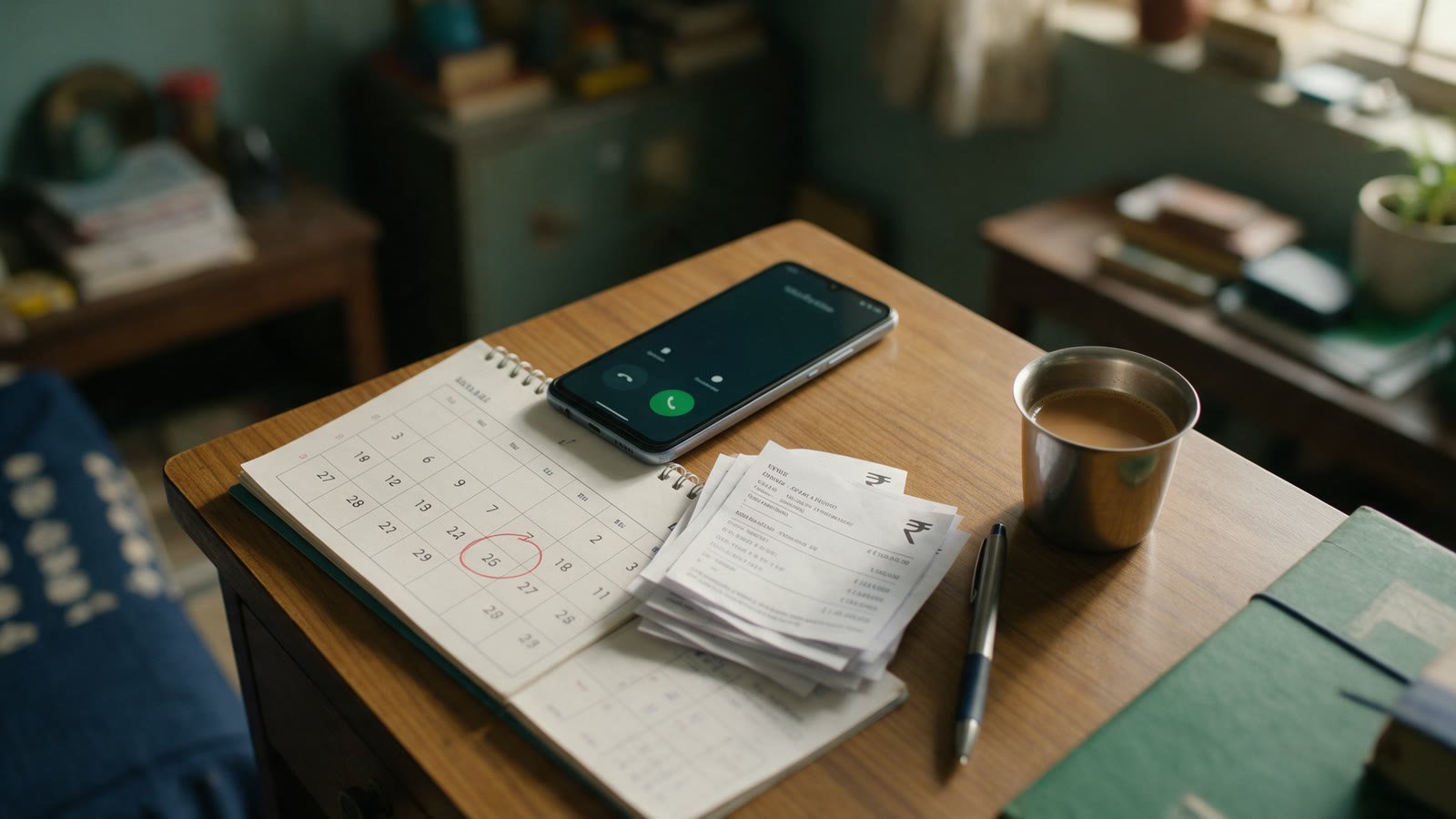
Debt collection management software is the system a bank or NBFC uses to find overdue loans early, decide how to approach each borrower, contact them through calls, SMS, WhatsApp or field visits, and record every promise and payment back on the loan. In India, it must also enforce RBI rules on how and when borrowers can be contacted.
A borrower misses one EMI of ₹15,602. Day 1, she is a reminder. Day 91, she is a non-performing asset.
What happens in those 90 days decides most of the recovery. And in most Indian lending operations, those days are spent waiting: for the overdue list to refresh, for a caller to get to the account, for a promise to pay to reach the loan system.
There is no villain here. Collection teams work hard. The gap is the software between the overdue loan and the person who can help.
What does debt collection management software do?
Good collection software does five jobs, in this order:
- Spots stress early. It flags accounts likely to miss a payment, before they do, using repayment history and behaviour signals.
- Decides the strategy per account. A first-time miss gets a gentle reminder. A third miss gets a call. A disputed charge goes to a specialist, not a collector.
- Contacts the borrower. Through voice calls, SMS, WhatsApp, email or a field visit, in the borrower’s language.
- Writes the outcome back. A promise to pay (PTP), a part payment or a dispute updates the loan record immediately, not at end of day.
- Proves compliance. Every call, message and action is logged, so an auditor can see exactly what happened and when.
Most teams have pieces of this. Few have all five working on one record.
How RBI’s overdue buckets shape collections
RBI’s Prudential Framework (June 2019) classifies overdue loans into Special Mention Account (SMA) buckets. Each bucket needs a different approach.
| Bucket | Days overdue | What it means | What the software should do |
|---|---|---|---|
| SMA-0 | 1–30 | Early miss, often a timing issue | Automated reminders, easy pay links, AI voice calls |
| SMA-1 | 31–60 | A pattern is forming | Personal calls, a promise to pay, check for hardship |
| SMA-2 | 61–90 | Close to NPA | Senior collectors, restructuring options, field visits |
| NPA | Over 90 | Non-performing asset | Recovery and legal workflows, with full audit trail |
The cheapest rupee to recover is in SMA-0. Every day an account sits in a queue, it moves closer to the next bucket.
The RBI rules your software must enforce
In August 2022, RBI directed banks, NBFCs, cooperative banks and ARCs that recovery agents must not call borrowers before 8 am or after 7 pm, and must not intimidate or harass them, verbally or physically. That rule cannot live in a training deck. It has to live in the dialler.
Your collection software should block, not just warn about:
- Calls outside 8 am to 7 pm
- Numbers on DND lists, unless the borrower has consented
- More attempts per day than your policy allows
- Scripts or messages your compliance team has not approved
It should also keep call recordings and action logs for audit. Trustt keeps them for 7 years.
Where AI voice agents fit
AI voice agents now handle the first, highest-volume layer of collections: reminders, promises to pay and simple disputes. They work best in SMA-0 and SMA-1, where the job is reaching every borrower quickly and politely.
What to check before you deploy one:
- Languages. Does it speak the borrower’s language, including code-mixed Hinglish?
- Speed. A pause of more than a second or two sounds robotic. Trustt’s agents respond in about 1.2 seconds.
- Scale. Can it handle month-end peaks? Trustt’s agents run 1,000+ calls at once.
- Write-back. Does a promise to pay update the loan record during the call?
- Handoff. When a borrower is upset or in hardship, does it pass to a human with the full context?
The agent recommends. The collector decides.
How to choose debt collection software: a scorecard
Score each vendor from 1 to 5 on each line. Weights reflect what moves recovery most.
| What to check | Weight | Why it matters |
|---|---|---|
| Works on the same loan record as your LMS | 25% | No re-keying, no end-of-day lag, no mismatched balances |
| Strategy by bucket and borrower segment | 20% | The right action for each account, not one script for all |
| RBI rules enforced before every call | 20% | Calling hours, DND and retry limits are blocked, not just logged |
| AI voice in Indian languages | 15% | Reaches every SMA-0 account in days, not weeks |
| Promise-to-pay and payment write-back | 10% | Collectors see the latest status before they call |
| Audit trail and reporting | 10% | Every action can be replayed for RBI or internal audit |
A vendor that scores low on the first line will struggle on all the others.
How Trustt runs collections
Trustt Collections (LCS) runs on the same loan record as Trustt’s loan management system. It picks up early stress signals, assigns a strategy to each account, and hands calls to Trustt AI Banking Agents: specialists such as PTP Closer, Dispute Manager and Hardship Triage. They speak 11 Indian languages plus Hinglish.
Calling windows, DND and retry caps are enforced before anything is dialled. Every promise to pay writes back to the loan as it happens. See the full lending stack on Trustt Digital Lending.
Collections are not a calling problem. They are a timing problem.
If your SMA-0 accounts wait more than a day for their first contact, we would like to show you what changes when they don’t.
Frequently asked questions
What is debt collection management software?
It is software that helps banks and NBFCs find overdue loans early, choose a strategy for each borrower, contact them by call, SMS, WhatsApp or field visit, and record every promise and payment on the loan.
What are SMA-0, SMA-1 and SMA-2?
They are RBI’s overdue buckets: SMA-0 is 1–30 days overdue, SMA-1 is 31–60 days and SMA-2 is 61–90 days. A loan overdue for more than 90 days becomes a non-performing asset.
What time can recovery agents call borrowers in India?
RBI says recovery agents must not call borrowers before 8 am or after 7 pm, and must not intimidate or harass them in any way.
Can AI voice agents be used for loan collections in India?
Yes. AI voice agents can handle reminders, promises to pay and simple disputes, as long as they follow RBI’s calling rules and hand difficult cases to a human.
Which debt collection software do Indian NBFCs use?
Indian lenders use several vendors. Trustt Collections works on the same loan record as Trustt’s loan management system and uses AI voice agents in 11 Indian languages plus Hinglish.